 Listing Camera
Short answer: The best time to photograph a house exterior is when the sun is lighting the front: morning for an east-facing front, afternoon for a west-facing front, and mid-morning to mid-afternoon for a south-facing front. North-facing fronts do best in soft overcast light or summer's early or late sun. Avoid shooting into backlight, and plan the interiors around that window.
In almost 20 years of photographing homes in Connecticut, I've learned to plan the whole shoot around the exterior. Interiors can be lit and managed; the sun can't. Get the timing right and the front photo practically takes itself. Get it wrong and you spend the rest of the day fighting shadows and a blown-out sky.
The rule: put the sun on the front of the house
You want the sun behind you or off to one side, lighting the face of the house. When the sun is behind the house, the front falls into shadow, the sky behind it turns white, and the photo looks flat and gloomy no matter what you do.
So the first thing I do before any shoot is figure out which way the front of the house faces. A map app with satellite view makes this a thirty-second job.
- East-facing front: shoot in the morning, when the sun is in the east and lighting the facade.
- West-facing front: shoot in the afternoon, as the sun moves west.
- South-facing front: you have the most flexibility; mid-morning through mid-afternoon usually works. In the Northern Hemisphere the sun stays to the south through much of the day, especially in winter.
- North-facing front: the hardest case. The facade gets little direct sun for much of the year. Aim for soft, even light: a bright overcast day, or early morning or late afternoon in summer when the sun swings far enough north to touch the front.
The back of the house faces the opposite way, which is why I often shoot the front and back at different times of day. If the back is the selling point, say a pool or a view, plan around that instead.
Why high noon usually isn't great
Midday sun comes from nearly straight overhead. It drops hard shadows under eaves, porches and trees, flattens out the shape of the house, and can make bright siding look washed out. It's not a disaster, and sometimes it's the only option, but if you have a choice, mid-morning or mid-afternoon light at a lower angle gives the house more shape and warmth.
Watch for the shadows you can't see from inside
- Tree shadows: dappled shade across the facade reads as blotchy in a photo. A slightly different time of day can move it off the house.
- Neighbor's house or a big tree: on tight lots, the shadow of the house next door can creep across the front in the late afternoon.
- Your own shadow: with the sun directly behind you, check the bottom of the frame.
Gray and overcast days
An overcast day isn't the end of the world. Clouds act like a giant softbox: shadows disappear and colors on the house look even. The problem is the sky, which turns into a flat white or gray sheet that makes the whole photo look cold. On gray days I frame with a little less sky, keep lights on inside so the windows glow slightly, and accept that the sky will need help in editing.
Seasons change the answer
The sun's path shifts a lot through the year. In winter it stays low and to the south all day, which gives long shadows and warm light even at midday, but the days are short and a north-facing front may never see direct sun. In summer it rises in the northeast and sets in the northwest, climbs high at midday, and can reach a north-facing front early and late. If a listing is going up in late fall here in Connecticut, I plan for an early-afternoon window and don't count on much after about three o'clock.
Season shows up in the yard too. Bare trees, brown grass or snow will be in the photo, and that's fine; it's the house as it is today. If the listing will sit into a new season, consider reshooting the exterior when the yard looks its best.
Plan the whole shoot around the light
Once you know the best exterior window, schedule the interiors around it. If the front looks best at ten in the morning, start there, then go inside. If it's best at three, shoot the interiors first. I check the forecast the day before and keep a backup time if clouds are coming.
Twilight shots
Twilight photos, taken just after sunset with every interior light on, can be stunning for the right house. They take practice, a tripod and good timing, and they're one of the places where hiring a photographer really pays off. Save them for listings where the house really glows at dusk.
Prep the outside like you prep the inside
- Cars out of the driveway and off the street in front, if possible.
- Trash and recycling bins out of sight.
- Hoses coiled, toys and tools put away, lawn mowed if you have the lead time.
- Garage doors closed, front door clean, porch light on or off but consistent.
The full list is in my photo prep checklist.
Framing the front
Hold the phone at chest height or a little higher, stand back far enough to use 1x if you can, and keep the vertical lines of the house straight up and down. Take the straight-on shot, then one from each front corner at an angle. My iPhone listing photo guide goes deeper on technique.
An honest note on skies
Many listing photos you see online have had the sky replaced. If you or your editor swap a gray sky for a blue one, keep it believable and check your MLS rules, since some require you to disclose edited photos. The house, the yard and the season should stay exactly as they are.
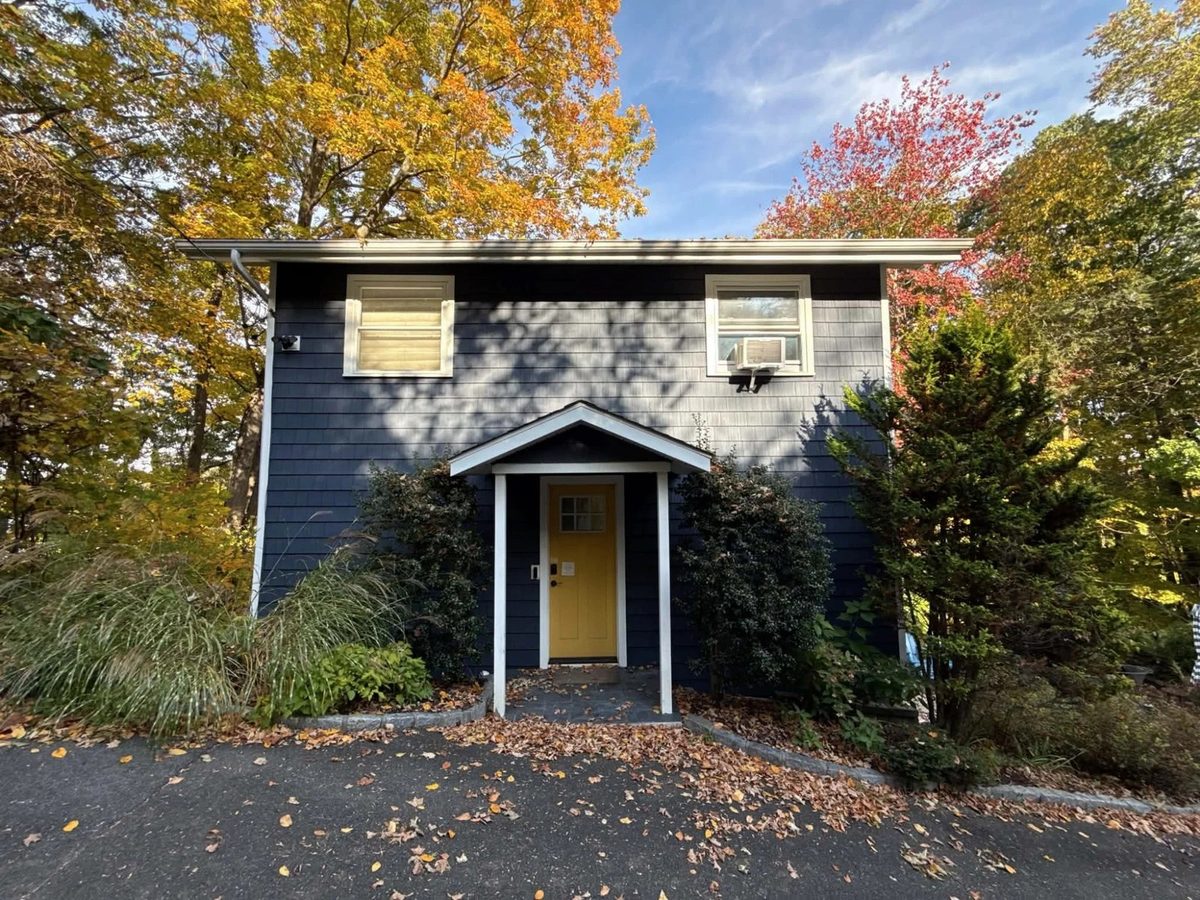
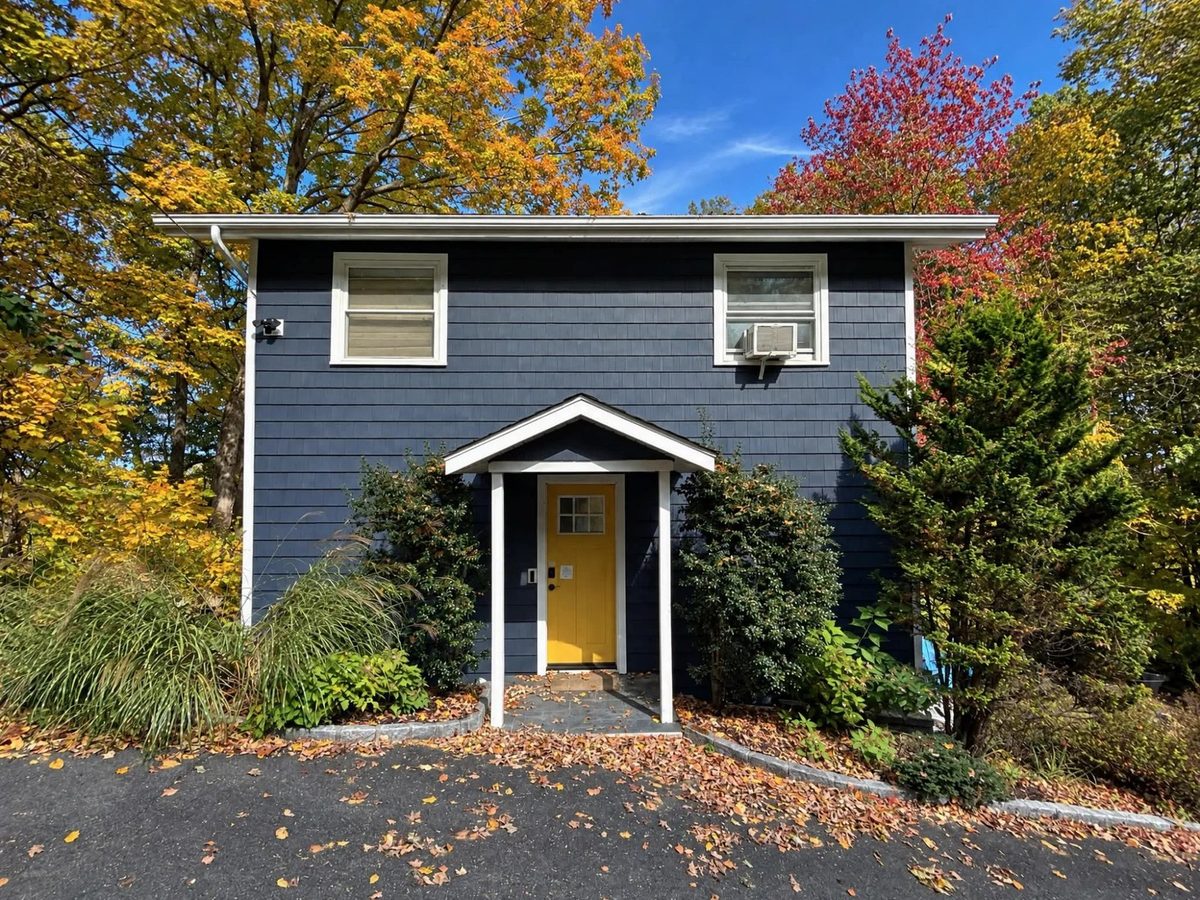
To be plain about my own app: Listing Camera always returns exteriors with a sunny blue sky, even if you shot on a gray day, and it evens out the light on the house in about 30 to 40 seconds per photo. It doesn't add, remove or stage anything, but a replaced sky is still an edit, so follow your MLS disclosure rules. That also means it isn't the tool for a twilight look. It's free to try with 3 enhancements.